
Supreme Court Strikes Down IEEPA Tariffs
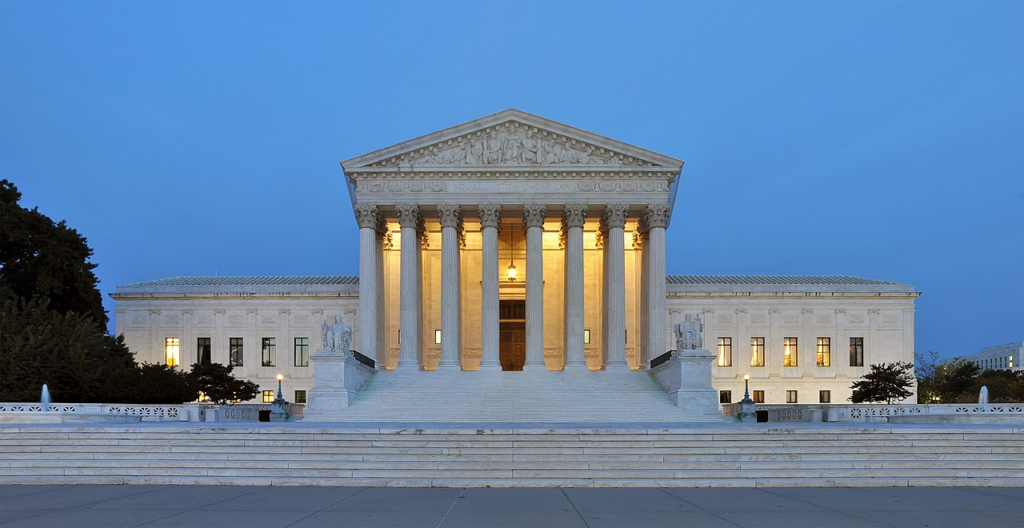
In a landmark 6-3 decision issued today, February 20, 2026, the Supreme Court struck down a series of sweeping tariffs imposed by the Trump administration, ruling that the International Emergency Economic Powers Act (IEEPA) does not grant the President the authority to unilaterally levy taxes on imports.
The consolidated cases—Learning Resources, Inc. v. Trump and Trump v. V.O.S. Selections—represent one of the most significant checks on executive trade authority in decades.
The Core Ruling
The Court held that the 1977 IEEPA statute, which allows presidents to “regulate” or “prohibit” international transactions during a national emergency, does not extend to the power of taxation (tariffs). Writing for the majority, Chief Justice John Roberts noted that while the law allows the President to block or restrict trade to address “unusual and extraordinary threats,” it does not function as a “blank check” to bypass Congress’s constitutional power of the purse.+1
Key takeaways from the opinion include:
- The “Major Questions” Doctrine: The majority invoked this principle, arguing that if Congress intended to delegate such vast economic power to the President, it would have done so with “explicit terms.”
- Lack of Precedent: The Court pointed out that in the nearly 50 years since IEEPA’s enactment, no president had ever used it to impose broad tariffs until now.
- Congressional Authority: The ruling reaffirms that the Constitution specifically grants the power to levy duties and taxes to the Legislative Branch.
Dissenting Opinions
Justices Clarence Thomas, Samuel Alito, and Brett Kavanaugh dissented. They argued that the broad language of IEEPA—specifically the power to “regulate” the “importation or exportation” of property—was intended to give the President maximum flexibility to protect national security and the economy in times of crisis.
Economic and Fiscal Impact
The ruling has immediate and far-reaching consequences:
- Tariff Removal: Approximately $230 billion in annualized tariff costs are expected to be removed.
- Potential Refunds: While the Court did not provide a specific mechanism for refunds, the decision that the tariffs were “illegal from the start” opens the door for importers to claim billions in back-paid duties.
- Deficit Concerns: The Committee for a Responsible Federal Budget (CRFB) estimates that the loss of this revenue could increase the projected national deficit by $2 trillion over the next decade.
What’s Next?
While this ruling invalidates IEEPA-based tariffs, it does not affect tariffs imposed under other laws, such as Section 301 (Trade Act of 1974) or Section 232 (Trade Expansion Act of 1962). The administration may now look to these alternative legal avenues to maintain its trade policy.
Original Ruling Here: https://www.supremecourt.gov/opinions/25pdf/24-1287_4gcj.pdf